The Pest Management Plan for Taranaki covers 20 species of pest plant or animal. On this page you can find out what they are, and what you must do if they are on the property you occupy.
See Taranaki pest plants in pictures
Select individual species for more information on each. Click on any image or graphic to see larger version.
Climbing spindleberry | Giant buttercup
Giant gunnera | Giant reed
Ginger (kahili) | Ginger (yellow)
Gorse | Madeira (mignonette) vine
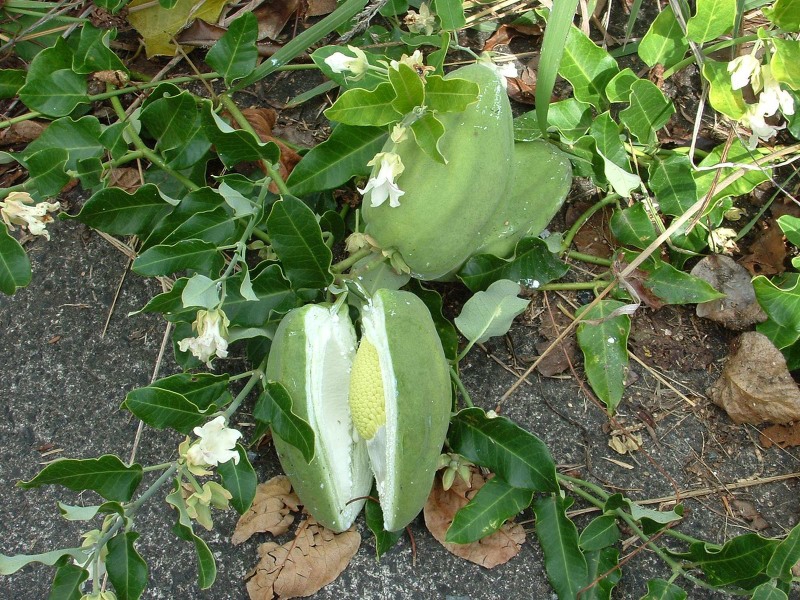
Moth plant | Mustelids (stoat, ferret, weasel)
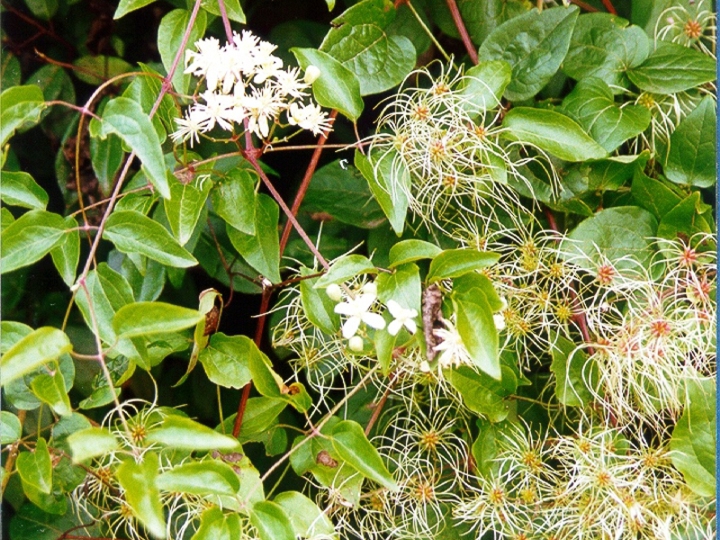
Old man's beard
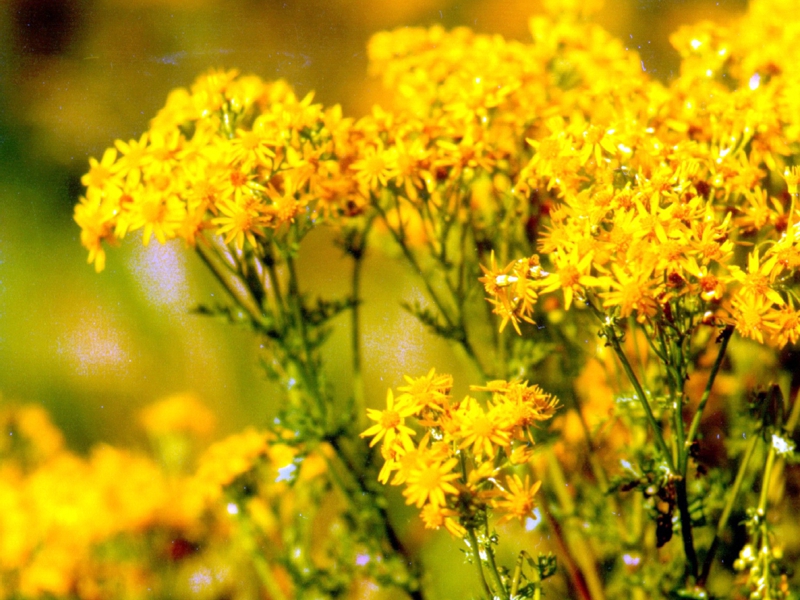
Possum | Ragwort
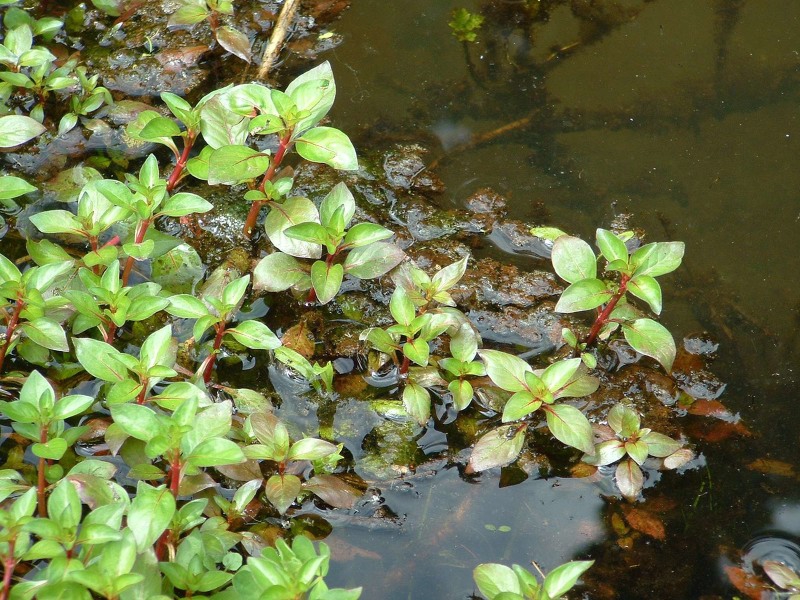
Senegal tea | Thistle (nodding)
Thistle (plumeless) | Thistle (variegated)
Wild broom
Also see info/advice on yellow bristle grass and woolly nightshade.
The pest plant species listed here are not the only threat to native plants, habitats, farms and gardens in our region.
Many of the pest plants are listed in the National Pest Plant Accord (NPPA)(external link). This is an agreement to prevent the sale, propagation or distribution of these species throughout New Zealand.
The Weedbusters Taranaki guide [PDF, 7.3 MB] will help you recognise, report and remove pest plants and other weeds. It also advises what native species to plant in their place. Hard copies are available free on request - please email weedbusters@trc.govt.nz.
For more information on the control of weeds go to the Weedbusters website. (external link)
Taranaki pest plants in pictures
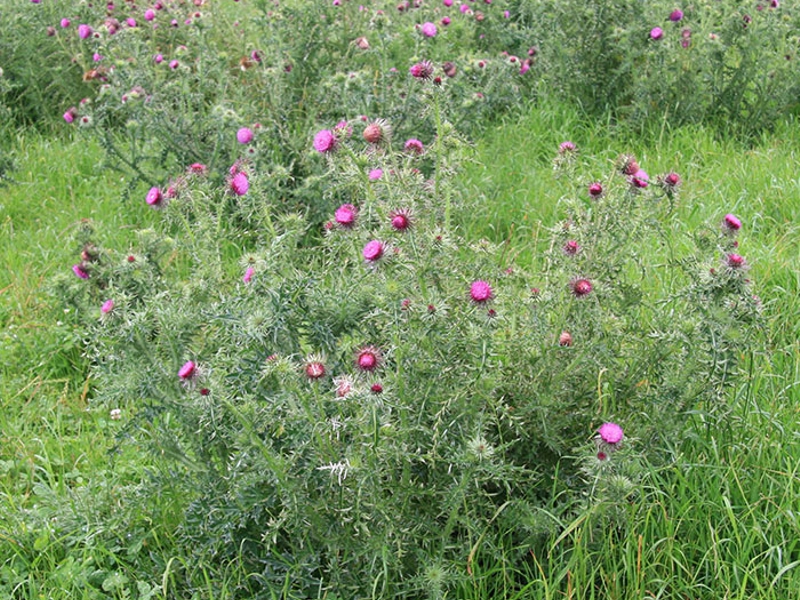
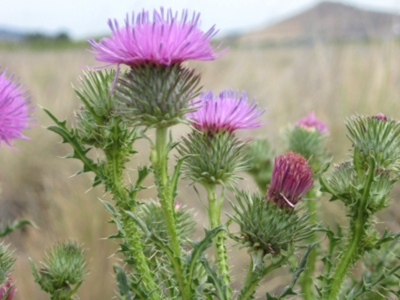
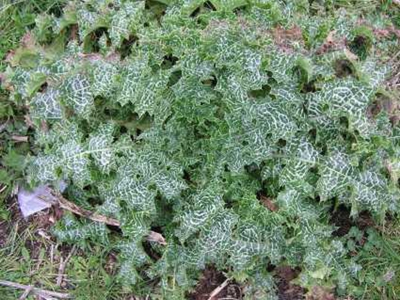
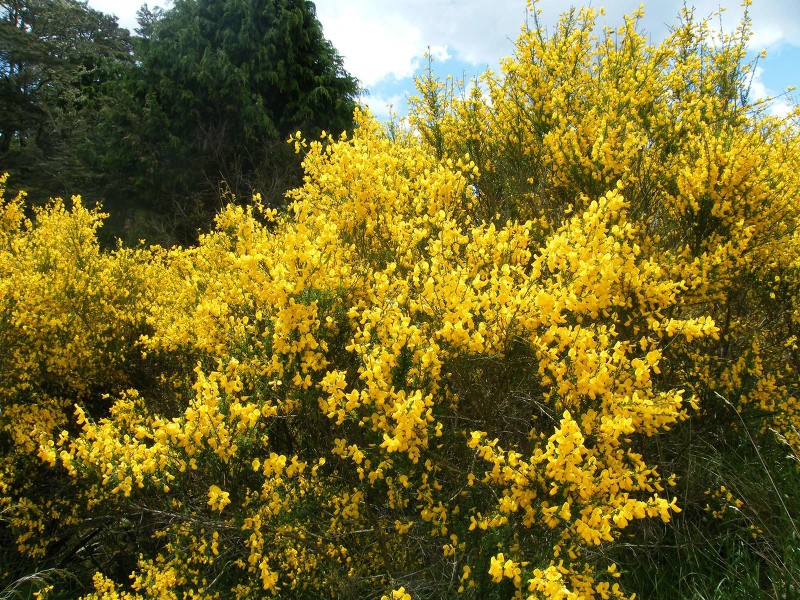
Protecting Taranaki’s land and water from pests and other harmful plants and animals is vital for our environment, taonga (treasures), and economic growth.
Under the Biosecurity Act 1993, the Taranaki Regional Council plays a key part in that protection, using its statutory Regional Pest Management Plan alongside a separate Biosecurity Strategy outlining broader biosecurity goals and actions over the next 20 years.
The Biosecurity Strategy covers all of the Council’s biosecurity activities and programmes relating to pests and other harmful organisms, regardless of status.
It acknowledges that biosecurity regulation is but a small part of the Council’s work.
The biosecurity activities and programmes have been grouped into five priority areas that identify what the Council wants to achieve over the lifetime of the Strategy:
- Pathway and exclusion programmes to prevent the introduction of harmful plants and animals to the region, and reduce the effects of existing pests.
- Eradication programmes to target five harmful species not yet established or widespread in Taranaki.
- Sustained control programmes to target 12 pests that are having a regional effect on the environment and agriculture, with rules (in the Regional Pest Management Plan for Taranaki) requiring land occupiers to undertake control.
- Community and site-led programmes where the Council works with others to protect environmental and agricultural values at particular sites.
- Other leadership activities include biosecurity planning, biological control and research, advice, education, advocacy and liaison.
Taranaki Regional Council Biosecurity Strategy [PDF, 2.2 MB]
The Regional Pest Management Plan is the Council’s ‘rule book’ that targets 17 plant or animal pests for eradication or sustained control in Taranaki.
Eradication is funded and undertaken by the Council. The aim is ambitious, but could prevent significant costs later should the targeted species become established.
The ‘sustained control’ programme applies to 12 species that are relatively widespread in Taranaki.
| Pest | Programme |
|---|---|
| Climbing spindleberry | Eradication |
| Giant reed | Eradication |
| Madeira (mignonette) vine | Eradication |
| Moth plant | Eradication |
| Senegal tea | Eradication |
| Brushtail possum | Sustained Control |
| Giant buttercup | Sustained Control |
| Giant gunnera | Sustained Control |
| Gorse | Sustained Control |
| Nodding thistle | Sustained Control |
| Plumeless thistle | Sustained Control |
| Variegated thistle | Sustained Control |
| Old man's beard | Sustained Control |
| Wild broom | Sustained Control |
| Kahili ginger | Sustained Control |
| Yellow ginger | Sustained Control |
| Ragwort | Sustained Control |
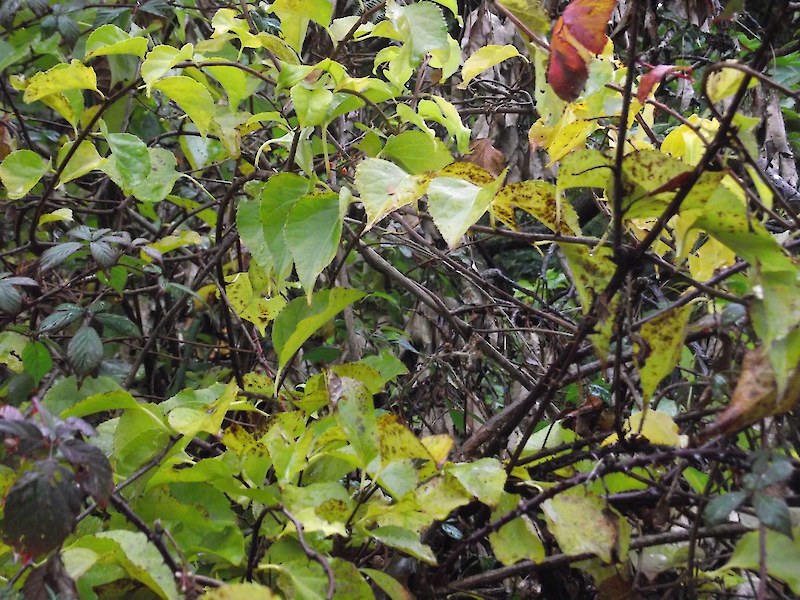
Climbing spindleberry
 Report any infestation of climbing spindleberry - call 0800 736 222 or email biosecurity@trc.govt.nz. The Taranaki Regional Council will undertake direct control.
Climbing spindleberry (Celastrus orbiculatus) is banned from sale, propagation or distribution.
More information on climbing spindleberry (Weedbusters)(external link)

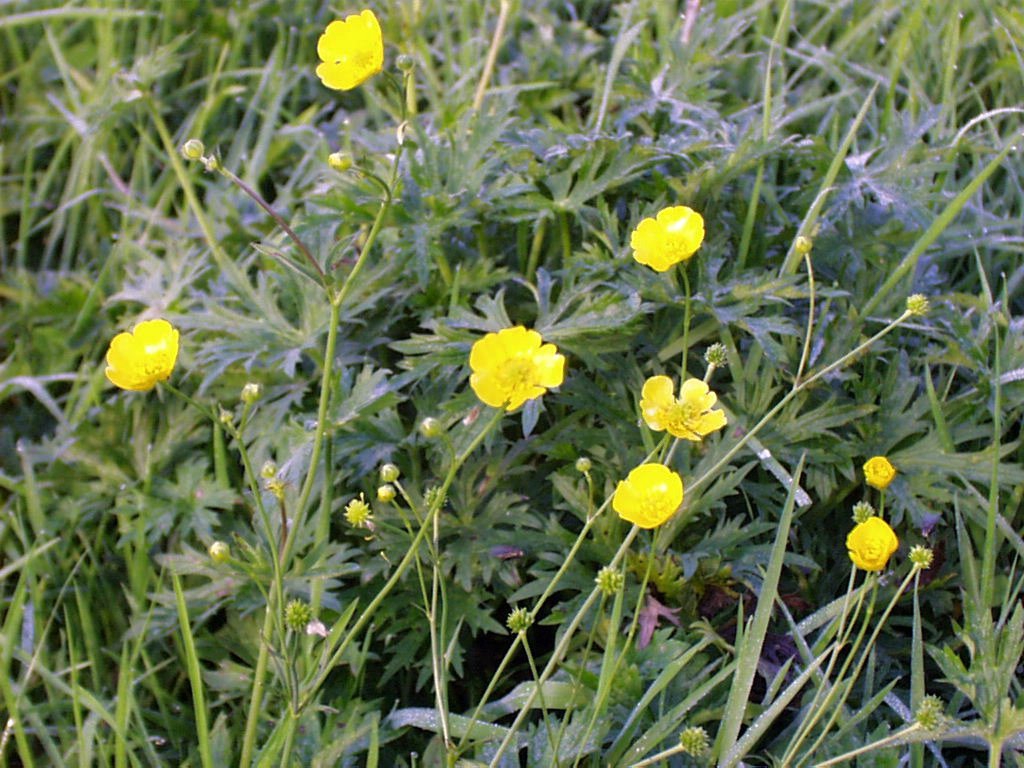
Giant buttercup
Giant buttercup within 5m of your property boundary should be destroyed.
The Good Neighbour Rule applies. If your property is free of this plant, notify the Council of any infestation/s on adjoining property/s. The adjoining occupier/s will then be required to destroy all giant buttercup within 5m of their propery boundary.
Giant buttercup (Ranunculus acris) is banned from sale, propagation or distribution.
Advice on giant buttercup control methods (AgResearch)(external link)

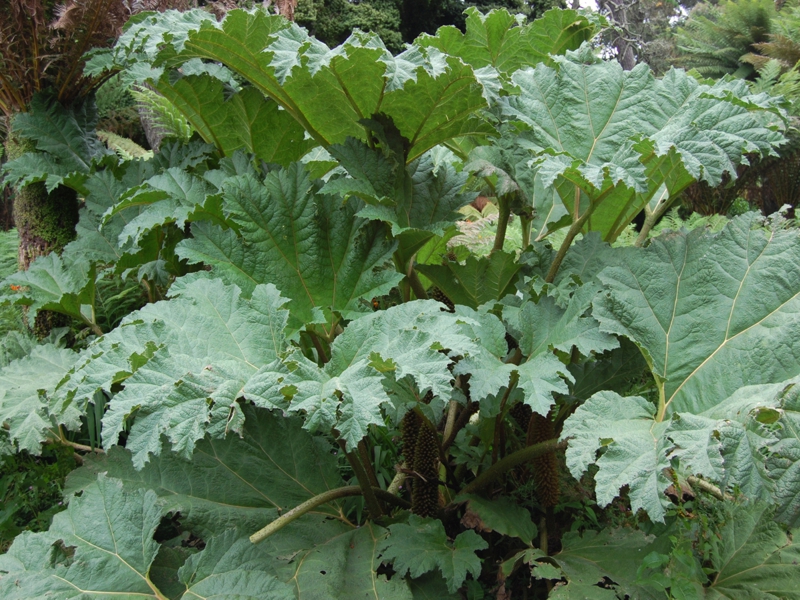
Giant gunnera
 You must destroy all giant gunnera on land you occupy.
Giant gunnera (Gunnera tinctoria; G. manicata) is banned from sale, propagation or distribution.
Giant gunnera is also known as Chilean rhubarb.
Advice on control of giant gunnera (Weedbusters)(external link)

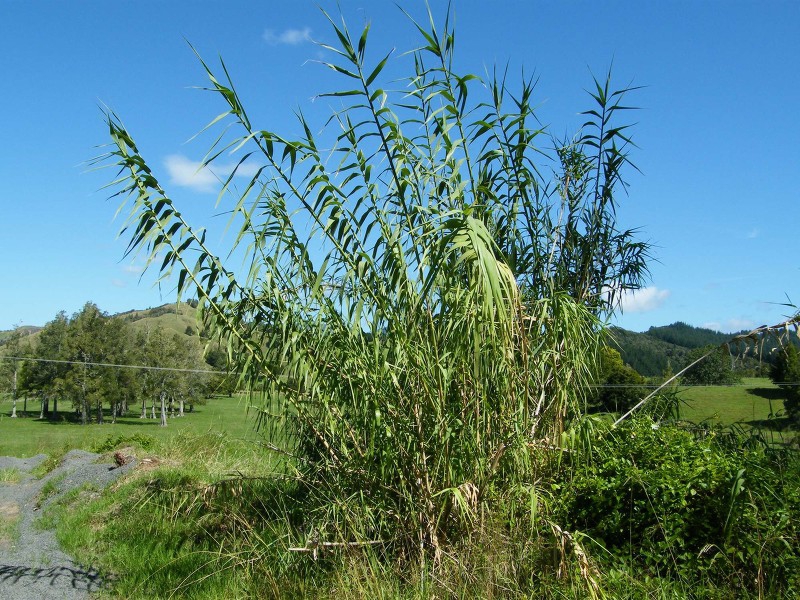
Giant reed
 Report any infestation of Giant reed - call 0800 736 222 or email biosecurity@trc.govt.nz. The Taranaki Regional Council will undertake direct control.
Giant reed (Arundo donax) is banned from sale, propagation or distribution.
More information on giant reed (Weedbusters)(external link)

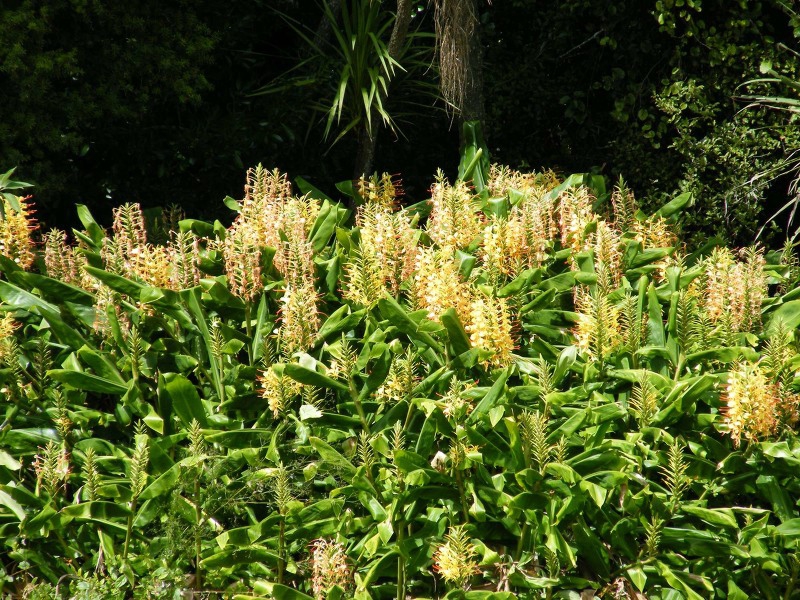
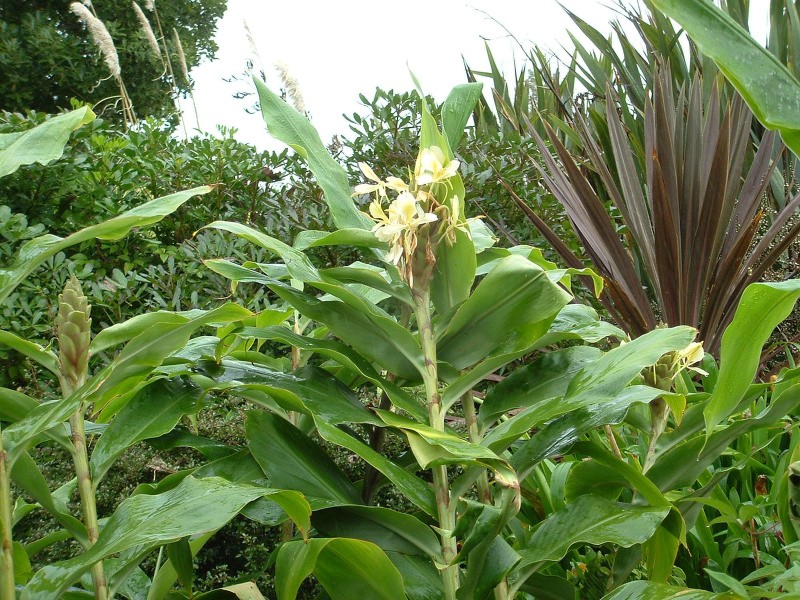
Kahili ginger
 You must destroy all Kahili ginger present on your land.
Kahili ginger (Hedychium gardnerianum) is banned from sale, propagation or distribution.
Kahili ginger is also known as wild ginger.
Advice on control of kahili ginger (Weedbusters)(external link)

Yellow ginger
 You must destroy all yellow ginger present on your land.
Yellow ginger (Hedychium flavescens) is banned from sale, propagation or distribution.
Advice on control of yellow ginger (Weedbusters)(external link)

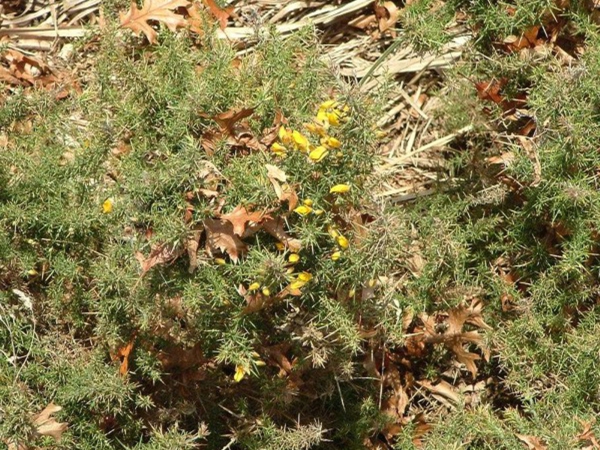
Gorse
 Gorse within 10m of your property boundary should be destroyed. (The rule does NOT apply to any property or part of a property in an urban area.)
The Good Neighbour Rule applies. If your rural property is free of this plant, notify the Council of any infestation/s on adjoining rural property/s. The adjoining occupier/s will then be required to destroy all gorse within 10m of their property boundary.
Gorse (Ulex europaeus) is banned from sale, propagation or distribution.
Advice on gorse control methods (Weedbusters)(external link)

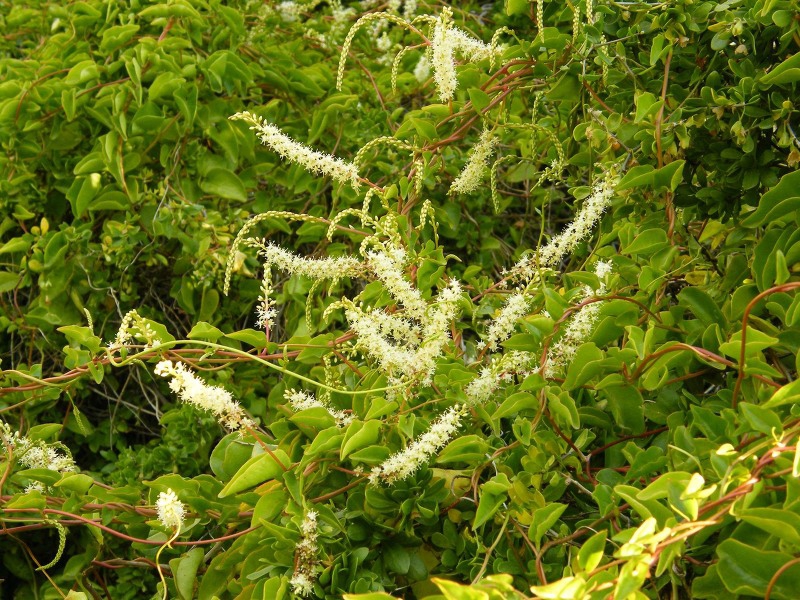
Madeira (mignonette) vine
 Report any infestation of Madeira (mignonette) vine - call 0800 736 222 or email biosecurity@trc.govt.nz. The Taranaki Regional Council will undertake direct control.
Madeira (mignonette) vine (Anredera cordifolia) is banned from sale, propagation or distribution.
More information on Madeira (mignonette) vine (Weedbusters)(external link)

Moth plant
 Report any infestation of moth plant - call 0800 736 222 or email biosecurity@trc.govt.nz. The Taranaki Regional Council will undertake direct control.
Moth plant (Araujia hortorum; A. sericifera) is banned from sale, propagation or distribution.
More information on moth plant (Weedbusters)(external link)

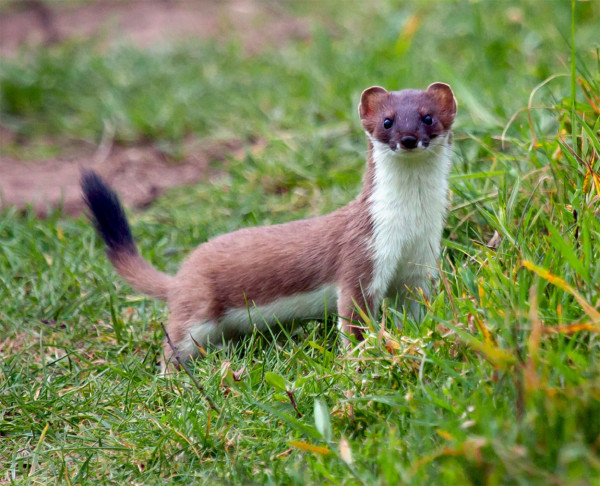
Mustelids (stoat, ferret, weasel)
Stoats, ferrets and weasels (Mustela ermine, Mustela furo, Mustela nivalis) were added to the Regional Pest Management Plan on 1 June, 2021.
Council will implement the Towards Predator-Free Taranaki programme and provide sustained predator control on the ring plain and coastal terraces by:
- undertaking initial direct control on rateable properties that lie in an area where at least 75% of land occupiers, covering at least 75% of the land area targeted, indicate, or have indicated, that they wish to be included in a Predator Control Area and will accept land occupier obligations; installation and contribution to the cost of traps for land occupiers in the programme; and
- providing ongoing technical advice, information, and support to land occupiers in the programme Predator Control Area.
A land occupier within a Predator Control Area must maintain ferrets, stoats, and weasels numbers present on their land by:
- servicing permanent mustelid traps a minimum of eight times per calendar year and record trap catch information in the TrapNZ database; and
- servicing any activated ‘remote sensor mustelid trap’ within 30 days of activation.
Old man's beard
 You must destroy all old man's beard on your property except for properties or parts of properties located in one of the areas described below and shown in blue on the map.
Exceptions (blue areas on map):
- Any parts of a property that lie within 50m of the middle of the Waingongoro River south of Opunake Rd and where the Council has not completed initial control.
- Any parts of a property that lie within 50m of the middle of the Pātea River east of SH3.
Old man's beard (Clematis vitalba) is banned from sale, propagation or distribution.
Advice on control of old man's beard (Weedbusters)(external link)

Possum
 Possums (Trichosurus vulpecula) are specifically targeted in the Council's Self Help Possum Control Programme.
If you occupy land in the area covered by this programme (see map), you must maintain possum numbers on the land to below a 10% residual trap catch.
Self Help Possum Control Programme

Ragwort
 The rules for ragwort vary according to your location in relation to the pest control line (see map) separating the ring plain/coastal terraces from the eastern hillcountry:
- You must destroy all yellow ragwort on any land you occupy west of the pest management line.
- Ragwort within 20m of the boundary on any land you occupy east of the pest management line should be destroyed. The Good Neighbour Rule applies east of the pest management line. If your property is free of this plant, notify the Council of any infestation/s on adjoining property/s. The adjoining occupier/s will then be required to destroy all ragwort within 20m of their propery boundary.
Ragwort (Jacobaea vulgaris) is banned from sale, propagation or distribution.
Advice on ragwort control methods (Weedbusters)(external link)

Senegal tea
 Report any infestation of Senegal tea - call 0800 736 222 or email biosecurity@trc.govt.nz. The Taranaki Regional Council will undertake direct control.
Senegal tea (Gymnocoronis spilanthoides) is banned from sale, propagation or distribution.
More information on Senegal tea (Weedbusters)(external link)

Nodding thistle
 Nodding thistle within 100m of your property boundary should be destroyed.
The Good Neighbour Rule applies. If your property is free of this plant, notify the Council of any infestation/s on adjoining property/s. The adjoining occupier/s will then be required to destroy all nodding thistle within 100m of their propery boundary.
Nodding thistle (Carduus nutans) is banned from sale, propagation or distribution.
Advice on nodding thistle control methods (AgResearch)(external link)

Plumeless thistle
 Plumeless thistle within 100 metres of your property boundary should be destroyed.
The Good Neighbour Rule applies. If your property is free of this plant, notify the Council of any infestation/s on adjoining property/s. The adjoining occupier/s will then be required to destroy all plumeless thistle within 100m of their propery boundary.
Plumeless thistle (Carduus acanthoides) is banned from sale, propagation or distribution.
Advice on plumeless thistle control methods (Auckland Council)(external link)

Variegated thistle
 Variegated thistle within 5m of your property boundary should be destroyed.
The Good Neighbour Rule applies. If your property is free of this plant, notify the Council of any infestation/s on adjoining property/s. The adjoining occupier/s will then be required to destroy all variegated thistle within 5m of their propery boundary.
Variegated thistle (Silybum marianum) is banned from sale, propagation or distribution.
Advice on variegated thistle control methods (Auckland Council)(external link)

Wild broom
 Wild broom within 10m of your property boundary shoud be destroyed.
The Good Neighbour Rule applies. If your property is free of this plant, notify the Council of any infestation/s on adjoining property/s. The adjoining occupier/s will then be required to destroy all wild broom within 10m of their propery boundary.
Wild broom (Cytisus scoparius) is banned from sale, propagation or distribution.
Advice on wild broom control methods (Weedbusters)(external link)

Yellow bristle grass
Farmers who see yellow bristle grass (YBG) on their property or adjoining road or rail reserves should notify the Council on 0800 736 222.
Further information
Woolly nightshade
People who see woolly nightshade in the region should visit the Weedbusters website for more information about proper identification of the plant and advice on its disposal.
Further information
Woolly nightshade information & advice (Weedbusters website)(external link)